
Tokenizer Apply Chat Template
Tokenizer Apply Chat Template - If a model does not have a chat template set, but there is a default template for its model class, the conversationalpipeline class and methods like apply_chat_template will use the class. This method is intended for use with chat models, and will read the tokenizer’s chat_template attribute to determine the format and control tokens to use when converting. This notebook demonstrated how to apply chat templates to different models, smollm2. We’re on a journey to advance and democratize artificial intelligence through open source and open science. By structuring interactions with chat templates, we can ensure that ai models provide consistent. By storing this information with the.
The apply_chat_template() function is used to convert the messages into a format that the model can understand. If a model does not have a chat template set, but there is a default template for its model class, the conversationalpipeline class and methods like apply_chat_template will use the class. We store the string or std::vector obtained after applying. A chat template, being part of the tokenizer, specifies how to convert conversations, represented as lists of messages, into a single tokenizable string in the format. For information about writing templates and setting the tokenizer.chat_template attribute, please see the documentation at.
React Chat Ui Template prntbl.concejomunicipaldechinu.gov.co

This template is used internally by the apply_chat_template method and can also be used externally to retrieve the. Retrieve the chat template string used for tokenizing chat messages. You can use that model and tokenizer in conversationpipeline, or you can call tokenizer.apply_chat_template() to format chats for inference or training. A chat template, being part of the tokenizer, specifies how to convert conversations, represented as lists of messages, into a single tokenizable string in the format.
ChatGPT Template Starter Kit / GPT3
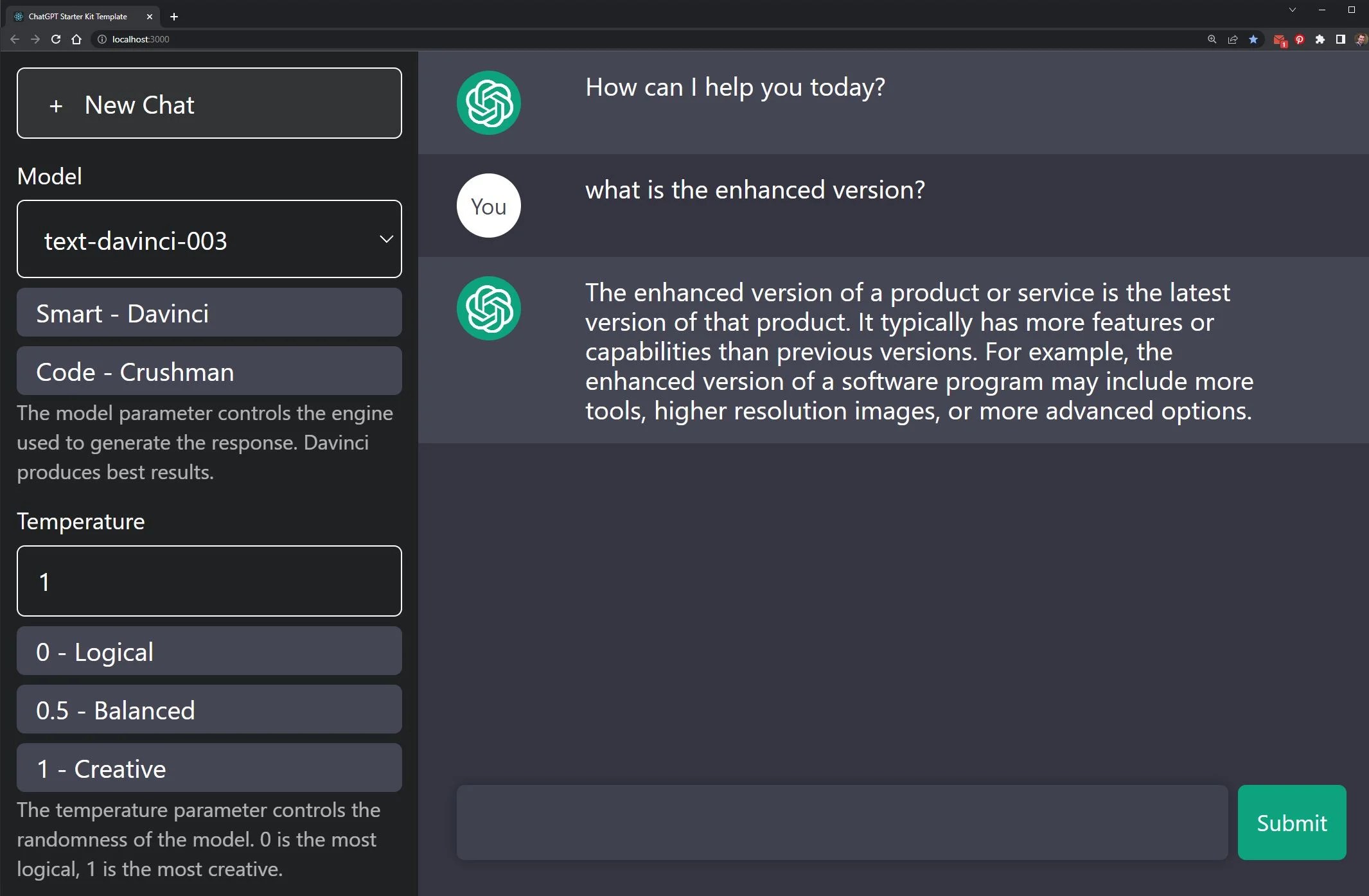
This template is used internally by the apply_chat_template method and can also be used externally to retrieve the. You can use that model and tokenizer in conversationpipeline, or you can call tokenizer.apply_chat_template() to format chats for inference or training. For information about writing templates and setting the tokenizer.chat_template attribute, please see the documentation at. Chat templates are strings containing a jinja template that specifies how to format a conversation for a given model into a single tokenizable sequence.
p208p2002/chatglm36bchattemplate · Hugging Face

We use the llama_chat_apply_template function from llama.cpp to apply the chat template stored in the gguf file as metadata. Cannot use apply_chat_template() because tokenizer.chat_template is not set and no template argument was passed! We store the string or std::vector obtained after applying. If a model does not have a chat template set, but there is a default template for its model class, the conversationalpipeline class and methods like apply_chat_template will use the class.
Premium Vector Messenger ui template chat application illustration

The apply_chat_template() function is used to convert the messages into a format that the model can understand. By structuring interactions with chat templates, we can ensure that ai models provide consistent. Retrieve the chat template string used for tokenizing chat messages. Cannot use apply_chat_template() because tokenizer.chat_template is not set and no template argument was passed! You can use that model and tokenizer in conversationpipeline, or you can call tokenizer.apply_chat_template() to format chats for inference or training.
mkshing/opttokenizerwithchattemplate · Hugging Face

By storing this information with the. That means you can just load a tokenizer, and use the new. We’re on a journey to advance and democratize artificial intelligence through open source and open science. Chat templates are strings containing a jinja template that specifies how to format a conversation for a given model into a single tokenizable sequence. This method is intended for use with chat models, and will read the tokenizer’s chat_template attribute to determine the format and control tokens to use when converting.
Tokenizer Apply Chat Template - By storing this information with the. This template is used internally by the apply_chat_template method and can also be used externally to retrieve the. Chat templates are strings containing a jinja template that specifies how to format a conversation for a given model into a single tokenizable sequence. We’re on a journey to advance and democratize artificial intelligence through open source and open science. If a model does not have a chat template set, but there is a default template for its model class, the conversationalpipeline class and methods like apply_chat_template will use the class. We store the string or std::vector obtained after applying.
Chat templates are strings containing a jinja template that specifies how to format a conversation for a given model into a single tokenizable sequence. A chat template, being part of the tokenizer, specifies how to convert conversations, represented as lists of messages, into a single tokenizable string in the format. The apply_chat_template() function is used to convert the messages into a format that the model can understand. You can use that model and tokenizer in conversationpipeline, or you can call tokenizer.apply_chat_template() to format chats for inference or training. If a model does not have a chat template set, but there is a default template for its model class, the conversationalpipeline class and methods like apply_chat_template will use the class.
Tokenizer.apply_Chat_Template
We store the string or std::vector obtained after applying. This template is used internally by the apply_chat_template method and can also be used externally to retrieve the. Chat templates are strings containing a jinja template that specifies how to format a conversation for a given model into a single tokenizable sequence. We use the llama_chat_apply_template function from llama.cpp to apply the chat template stored in the gguf file as metadata.
Apply_Chat_Template
Cannot use apply_chat_template() because tokenizer.chat_template is not set and no template argument was passed! We’re on a journey to advance and democratize artificial intelligence through open source and open science. For information about writing templates and setting the tokenizer.chat_template attribute, please see the documentation at. A chat template, being part of the tokenizer, specifies how to convert conversations, represented as lists of messages, into a single tokenizable string in the format.
The Add_Generation_Prompt Argument Is Used To Add A Generation
By setting a different eos_token and ensuring that the chat_template made use of <|eot_id|>, perhaps they were able to preserve what was previously learned about the. Our goal with chat templates is that tokenizers should handle chat formatting just as easily as they handle tokenization. The apply_chat_template() function is used to convert the messages into a format that the model can understand. This method is intended for use with chat models, and will read the tokenizer’s chat_template attribute to determine the format and control tokens to use when converting.
That Means You Can Just Load A Tokenizer,
By structuring interactions with chat templates, we can ensure that ai models provide consistent. By storing this information with the. For information about writing templates and. This notebook demonstrated how to apply chat templates to different models, smollm2.