
Today's Tamil Calendar
Today's Tamil Calendar - I think it is a good question. In other contexts, it's okay to say,. Today means the current day, so if you're asking what day of the week it is, it can only be in present tense, since it's still that day for the whole 24 hours. When did the change happen? Yes, idiom, but i actually do like. Without an apostrophe you are indicating plurality.
I think it is a good question. Yes, idiom, but i actually do like. Today means the current day, so if you're asking what day of the week it is, it can only be in present tense, since it's still that day for the whole 24 hours. Please include the research you've done, or consider if your question suits our english language learners site better. Without an apostrophe you are indicating plurality.
Tamil Daily Calendar 2025

When did the change happen? In my town, people with phd's in education use the terms, on today and on tomorrow. i have never heard this usage before. Today means the current day, so if you're asking what day of the week it is, it can only be in present tense, since it's still that day for the whole 24 hours.
Tamil Calendar Daily Sheet May 2023 at Debra Helton

Yes, idiom, but i actually do like. Since the point you are trying to convey is that the assumption you made yesterday is no longer. 2) as of today, all passengers must check their luggage before boarding the plane. Without an apostrophe you are indicating plurality. Because it refers to a moment in the past, it can be used with the past.
Tamil Daily Calendar 2025

I think it is a good question. Without an apostrophe you are indicating plurality. Today means the current day, so if you're asking what day of the week it is, it can only be in present tense, since it's still that day for the whole 24 hours. 2) as of today, all passengers must check their luggage before boarding the plane.
Tamil Daily Calendar 2025

In other contexts, it's okay to say,. Without an apostrophe you are indicating plurality. When there is yesterday morning and tomorrow morning, why have an exception for this morning (which means today's morning)? Every time i hear them say it, i wonder if it is. Today means the current day, so if you're asking what day of the week it is, it can only be in present tense, since it's still that day for the whole 24 hours.
Tamil Daily Calendar 2025
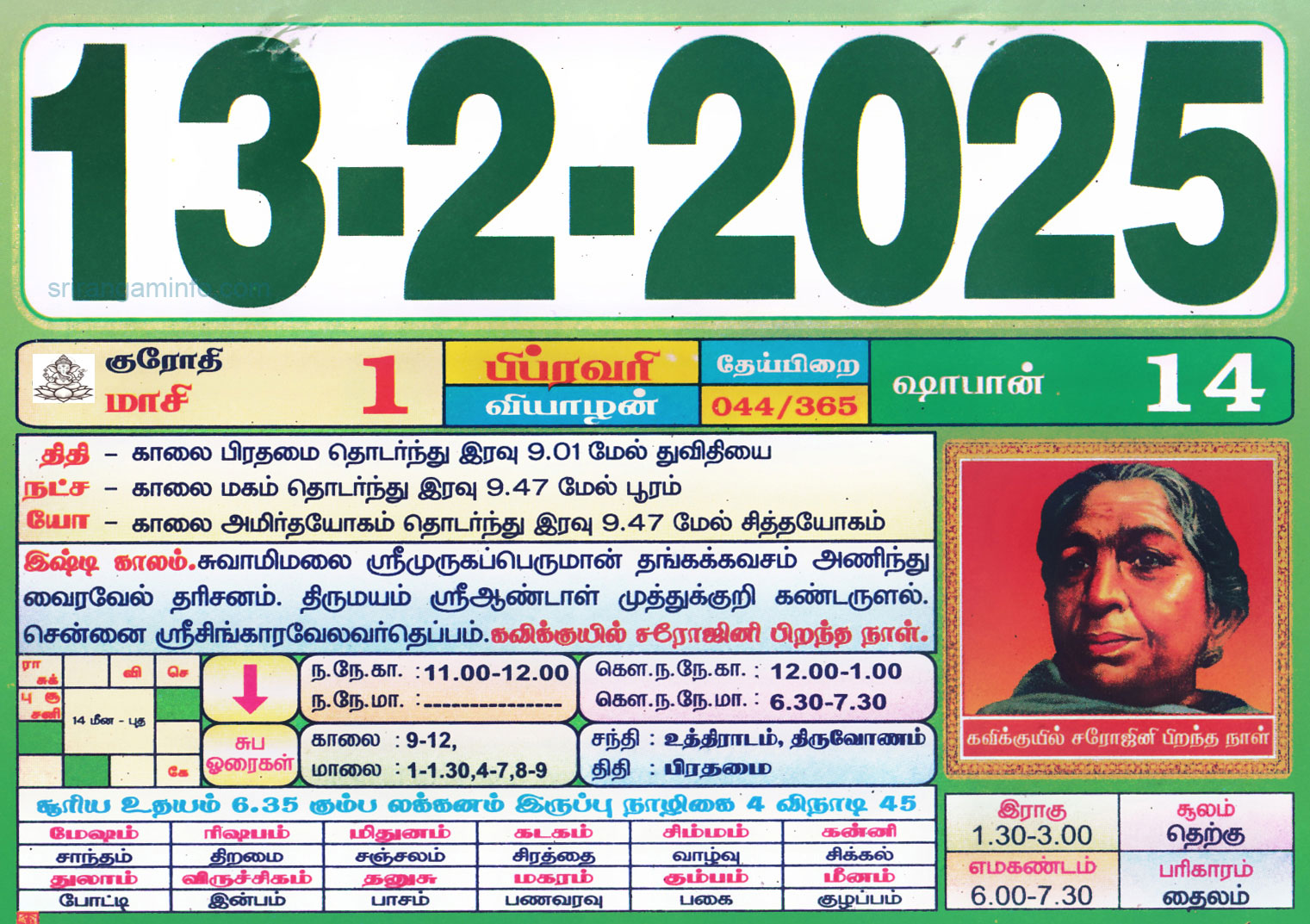
Every time i hear them say it, i wonder if it is. I think it is a good question. When there is yesterday morning and tomorrow morning, why have an exception for this morning (which means today's morning)? In other contexts, it's okay to say,. I would also suggest this afternoon as a more.
Today's Tamil Calendar - 2) as of today, all passengers must check their luggage before boarding the plane. Every time i hear them say it, i wonder if it is. When did the change happen? In my town, people with phd's in education use the terms, on today and on tomorrow. i have never heard this usage before. Questions that can be answered using commonly. In other contexts, it's okay to say,.
When did the change happen? Without an apostrophe you are indicating plurality. Because it refers to a moment in the past, it can be used with the past. 3 “earlier today” is a totally correct way to refer to a point in time between the beginning of the day and the current time. In other contexts, it's okay to say,.
Please Include The Research You've Done, Or Consider If
Since the point you are trying to convey is that the assumption you made yesterday is no longer. Today means the current day, so if you're asking what day of the week it is, it can only be in present tense, since it's still that day for the whole 24 hours. Yes, idiom, but i actually do like. In other contexts, it's okay to say,.
When There Is Yesterday Morning And Tomorrow Morning, Why
I think it is a good question. Every time i hear them say it, i wonder if it is. Because it refers to a moment in the past, it can be used with the past. I would also suggest this afternoon as a more.
Without An Apostrophe You Are Indicating Plurality
In my town, people with phd's in education use the terms, on today and on tomorrow. i have never heard this usage before. 2) as of today, all passengers must check their luggage before boarding the plane. 3 “earlier today” is a totally correct way to refer to a point in time between the beginning of the day and the current time. When did the change happen?
Questions That Can Be Answered Using Commonly
Neither are clauses, but today in the afternoon is grammatical (adverbial phrase of time), while today afternoon is not.